
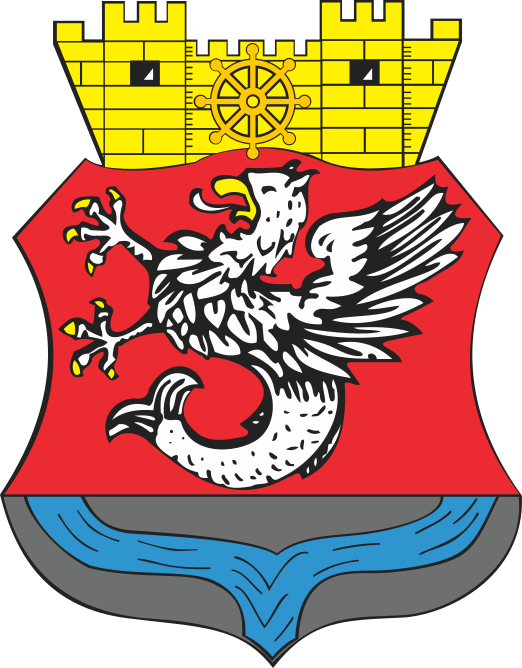
Hans Lange and the Neglected Prince of Darłowo


Duke Bogislaw X became the most famous duke Pomerania ever had, and his name was honoured there for centuries. Yet in his youth he walked the streets of Darłowo (Rügenwalde) in rags, and without the good farmer Hans Lange, so the legend says, he would never have become so great a lord.


1 A prince in rags
Duke Eric II of Pomerania lived in bitter, irreconcilable strife with his wife Sophia, because she did not conduct herself as a princess should. He had therefore sent her away from him to Darłowo, where she kept a princely court with her lover, the steward Hans Massow. Her two youngest sons, Casimir and Bogislaw, were with her. But she did not care for them; because of their father she was even hostile to them.
She had the princes go to the town school with the burghers’ children and did not give them even the barest clothing. So the poor young lords went about like the poorest pupils, in torn clothes, their toes poking out of their shoes, and everyone believed their mother would not have minded if they had perished altogether.
2 The farmer from Łącko
Not far from Darłowo, in the village of Łącko (Lantzke), there lived at that time a farmer called Hans Lange, sensible by nature and fairly well off. He often came to town, and when he saw the young dukes so ragged and often hungry, he felt sorry for them. Bogislaw above all, the handsomer and merrier of the two, went to his heart.
One day he spoke to him in his Pomeranian dialect: “Duke Bogislaw, you go about as if you belonged nowhere! Don’t you know you are a prince? Will your mother give you nothing, that you have such poor clothes and shoes?” The boy answered proudly: what did it matter to him? If he, the duke, had nothing, the farmer would hardly give him anything.
“Yes, Bogislaw, it matters to me,” said the farmer. “What if I were your farmer and gave you my rents every year, so that you could buy clothes with them?” The prince liked that, but he did not dare ask his mother. The farmer advised him to ask the steward Hans Massow instead. So it was done, and Massow obtained Hans Lange from the duchess to be his farmer.
The farmer was glad and went at once with the young duke to a draper. He bought London cloth for a coat and breeches, fustian for a doublet and a pair of new shoes, and dressed him anew from head to foot. Bogislaw treasured his new clothes like gold and began to think more of himself, so that the farmer and everyone else took pleasure in it.
3 A free man
Meanwhile Duke Eric died at Wolgast, soon afterwards his eldest son Wartislaw, and not long after that the second, Casimir, from poison, it is said, given to him by his own mother. Now Duchess Sophia thought to keep the government for herself, as Bogislaw’s guardian.
Then Hans Lange came to town and advised the young duke to flee to his uncle, Duke Wartislaw, who would tell him how to keep his land and his rule. He gave him a sword, a horse, boots and spurs and all that went with them, and let him ride away in secret. In Western Pomerania the nobles joined him, so that within a few days he had more than three hundred horsemen with him. His uncle advised him to ride straight to Darłowo and take the government from his mother. On the way more and more people flocked to him, and in towns, monasteries and noble manors he was received with great joy.
When his mother heard of it she did not wait. She took all her treasures and jewels and fled with Hans Massow to Gdańsk (Danzig), where within a few years she had spent everything. Bogislaw took up the rule. He did not send after his mother, so as not to shame her among strangers.
To Hans Lange he showed great honour and promised to give him whatever he desired. The farmer would take nothing. He asked only to be free of all dues for the rest of his life. The duke gladly granted it and offered the same for his heirs. But Hans Lange declined: his children should stay farmers. If they behaved well, they could have no better station.
- Julin, the Greatest City in Europe · Wolin
- The White Maiden in the Forest of Trzebież · Trzebież
- The Robber Castle near Łoźnica · Łoźnica

Heimweer.be · Europees Erfgoed Bewaard

