
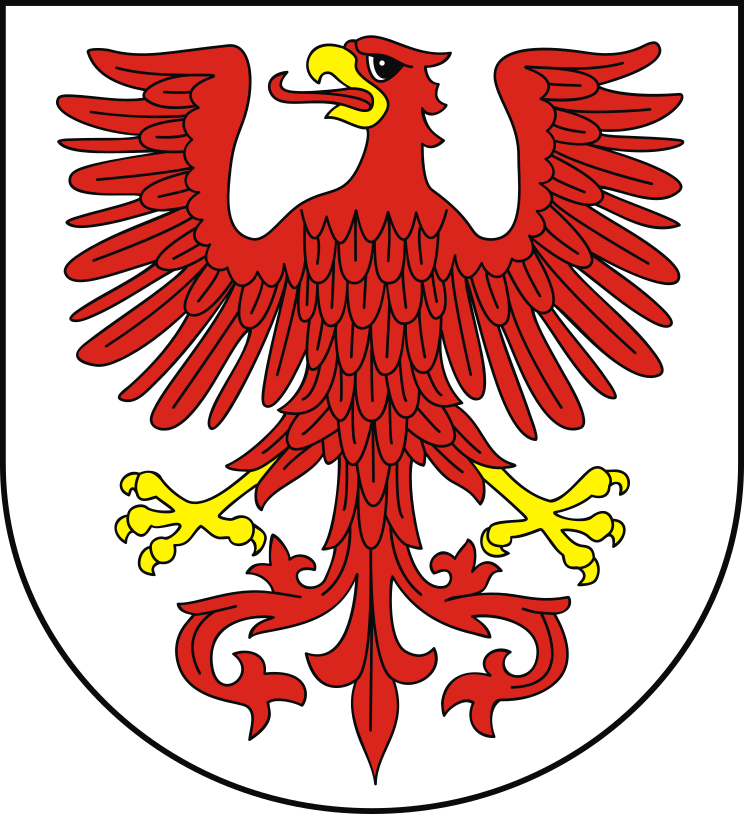
How Wicked Hans Burnt His Mouth at Ośno


“Hans has burnt his mouth,” people used to say all over the Mark of Brandenburg. Whoever heard the proverb knew who was meant: Wicked Hans, the Duke of Żagań (Sagan). And whoever wanted to know where he had burnt his mouth was given the name of a small town: Ośno Lubuskie, which was then called Drossen.


1 Wicked Hans
Duke Hans lived in the fifteenth century. Historians know him as Jan II of Żagań, and they gave him nicknames that promise little good: the Mad, the Wild, the Cruel, the Bad. He quarrelled with his brothers over their duchy, sold his own, fought for years over Głogów, and in the autumn of 1477 he invaded the lands of Brandenburg, as far as Berlin and Frankfurt on the Oder.
The legend tells that he often ravaged the lands of Brandenburg with his raids. And so one day he came before Ośno, a small town in the district of Sternberg, not far from Frankfurt. He had not come to bargain. He meant to drive out or murder the citizens, plunder their houses and burn them to the ground.
The gates were shut, the bell was rung, and everyone who had a weapon climbed onto the wall.
2 On the walls
Ośno was already an old town by then. It is first mentioned in 1252, in Latin, as civitas forensi Osna, a market town. Its name is Slavic and is linked to osa or osina, the aspen. It lay on the little river Łęcza, held first by the bishops of Lubusz and later by the margraves of Brandenburg, and it had its walls.
The men of Ośno were no cowards. They armed themselves for a brave defence. When the duke charged with his men and tried to scale their walls, they stood on top, shoulder to shoulder, and beat back the assault with all their strength.
Yet there were too few of them. And when they saw the duke charging again with fresh troops, their courage sank. Their arms were tired, the ranks on top of the wall had grown thin, and below, ladders were already being set against the stones again. They were about to climb down from the walls and flee.
3 Boiling porridge
Then their wives came. They spoke to their husbands, put heart into them and reminded them of their duty towards them, their wives. And they did not come empty-handed. In pans and kettles they dragged up boiling hot porridge that they had cooked at home on the fire. Steaming, the kettles were carried up the wall, right to the battlements.
When the enemies now came clambering up the walls on their ladders, the women poured the porridge over their heads and backs. The attackers screamed, let go of the rungs and fell back. Half scalded and half suffocated, they had to retreat in haste, and Wicked Hans had to go with them.
From that the proverb remained, which could be heard for a long time in the Mark, half mocking, half proud: “Lord Hans burnt his mouth on the porridge before Drossen!”

Heimweer.be · Europees Erfgoed Bewaard

