
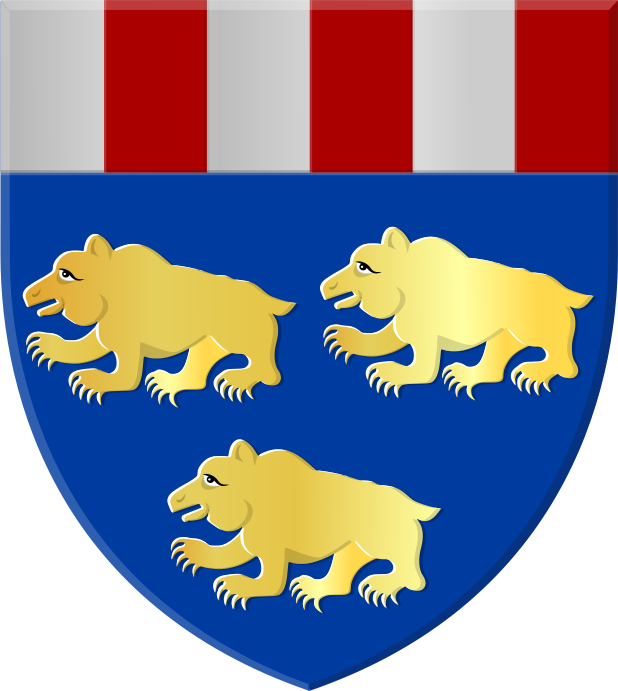
Karel the Good and the Forest of Beernem


In the year 1127, when the light of the Middle Ages shone dimly over Flanders, Count Karel the Good was brutally murdered in the Sint-Donaaskerk in Bruges. The powerful Erembald clan, blinded by jealousy, drove a knife deep into his noble heart. Yet the veil between life and death would not close for Karel. His spirit lived on in the legends of the Flemish people, especially in the dark forests of Beernem, where he had loved to hunt in life.


1 The Hunter of Beernem
In the dark days of November, when mist hung low over the forest of Beernem like a gray shroud, there lived a forester named Evert. He knew every footpath, every ancient oak in these vast woodlands. The animals were his friends, and the trees whispered their secrets to him. But for the past month, everything had changed.
Every night, when the full moon broke through the clouds, Evert heard the sound. A hunting horn—clear, long-drawn tones that tore the air as if a madman were playing. Then the thunder of hoofbeats on invisible paths, the howling of hounds that could never be seen. “It is not natural,” Evert whispered to himself, huddling closer to the hearth fire.
One night, his curiosity could wait no longer. Evert pulled on his thick woolen coat, grabbed his lantern, and walked into the night. The moon hung high, nearly full, bathing everything in pale, unforgiving light. The trees seemed like evil spirits, their branches stretched out like skeletal hands.
Then he saw it: a group of riders on black, gleaming horses, their forms vague but unmistakable. At the front rode a man with a golden horn—a count, Evert could tell by his clothing and bearing. “Who are you?” cried the forester, trembling.
2 The Ghost of the Count
The hunter wheeled his horse around and fixed Evert with eyes like glowing coals. “I am Karel,” he spoke, and his voice sounded like wind through deep caverns. “Karel the Good, Count of Flanders. Once I ruled over millions of souls. Once I hunted in these forests as a free man.”
Evert fell to his knees, not from fear, but from awe. This was no evil spirit, he realized—this was a tragedy, an injustice that could not be forgiven.
“Why are you here?” asked Evert softly. “Why do you not rest in peace?”
Karel dismounted, and his foot did not touch the earth. “Because the truth has not been told,” he said, and the moon seemed to grow dimmer for a moment. “They say the Erembald clan murdered me for power and gold. But there is more. A man close to the throne, someone I trusted—he was complicit. That truth is buried with my body, and as long as it remains hidden, I cannot rest.”
The forester heard the tears in Karel’s voice—the tears of a count struck down by betrayal. “Help me,” pleaded Karel. “Ensure that the truth comes out. Then I will be able to depart from this darkness.”
3 The Quest for Truth
Evert traveled to Bruges, where the Sint-Donaaskerk loomed impressively against the sky. In the Benedictine monasteries, he found old chronicle writers, men who worked in silence each day, recording history. The monk Godfried, a very old man with a white beard, knew the truth.
“You speak of betrayal,” Godfried said slowly. “Historical accounts vary considerably. In some texts, a certain bishop is suspected. But why do you ask? The Count has been dead three generations.”
Evert told of the night, of Karel’s ghost and his plea. Godfried listened without interruption, then asked Evert to accompany him to the deepest cellars of the church. There, beneath thick layers of dust and forgetfulness, Godfried found a seal—a noble seal—attached to a letter.
The letter, written in Latin, testified to plots and betrayal. A high-ranking clergyman had indeed been part of the murder plot. The reason was jealousy: Karel wanted to give more power to the people, less to the Church.
“This truth must come to light,” Godfried said gravely. “The Count deserves vindication.”
4 Redemption in Moonlight
Evert returned to the forests of Beernem, bearing copies of the letter and testimony from Godfried. That night, when the moon shone full once more, the forester called out into the heart of the woods. “Count Karel! Count Karel!”
The hunting horn sounded one last time—no longer shrill and desperate, but full, dignified, like a farewell. Karel appeared in the moonlight, and this time Evert saw something changed in his face. No more rage, no more pain.
“You have redeemed me,” Karel spoke softly. “The truth is told. History will now know that I was not merely a Count who died for injustice, but also a man who loved his people.”
Then—and Evert would never forget it for the rest of his life—the Count began to fade. Not like mist, but like dew in the morning sun. His body became transparent, then lighter, then gone entirely. The hunting dogs disappeared as well. The horses stepped back into the mists. Only the echo of the horn remained for a few moments, growing softer and softer, until it ceased entirely.
Evert stood alone in the moonlight. But in his hands, he still felt the warmth of that encounter. And so the story spread, from mouth to mouth, in the forests of Beernem: the night a simple forester gave redemption to a count.
- The Witch of Beernem · Beernem
- The Pin Witch of Beernem · Beernem
- The Maid and the Devil’s Book · Waregem

Heimweer.be · Europees Erfgoed Bewaard

