
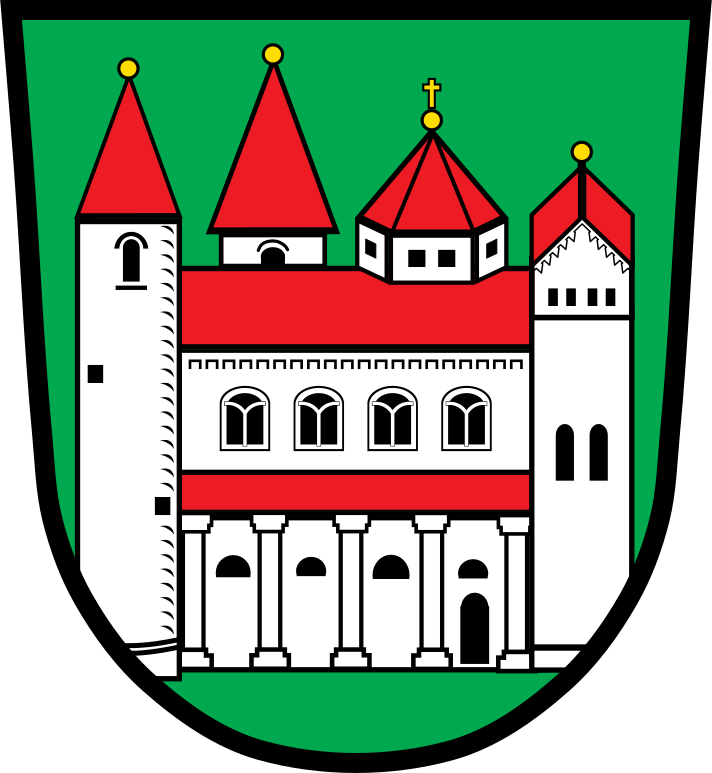
The Spring of Amorsbrunn


At the edge of Amorbach, where the Odenwald gives way to the Spessart, a spring rises beneath a small chapel and yields four litres of water a second, summer and winter alike. It feeds the brook that from here on is called the Amorbach. The place bears the name Amorsbrunn, and the legend tells that a holy man called Amor recognised this water as sacred in the year 734. Long before that the spot was already a cult site, and to this day people with an unfulfilled longing for children come to the stone basin beside the chapel.


1 The spring in the forest
The spring of Amorsbrunn is astonishingly constant. Summer and winter it comes up beneath the floor of the chapel, even and clear, and fills a brook that above this point often lies dry. Only here does the water gain strength, and only from here does it carry a name. For people who lived in a forest full of uncertain streams, a spring that never fails was no ordinary thing. It was a wonder to be honoured, long before anyone could explain it.
Before a chapel stood over it, Amorsbrunn was a sanctuary. Scholarship holds the cult site to be Roman or Germanic: a place where the water was worshipped as divine, long before the first Christian in the Odenwald. Such spring sanctuaries were seldom destroyed later, but baptised. A cross was set where an old cult had been, and out of the pagan spring came a Christian one. The water stayed the same; only the name of the blessing changed.
2 Saint Amor and the year 734
But who was Saint Amor? The answer is younger than the question. Only around 1443 did a secular priest from Rothenburg, Johannes Keck, come to the abbey of Amorbach for several years and declare the place the foundation of a Saint Amor. This saint, it was said, lay buried in Muensterbilsen near Maastricht and had christianised the sanctuary in the year 734. To secure his reading, Keck himself travelled to the Netherlands, accompanied by a farmer from Neudorf, and brought back relics of the saint as well as a drawing of how he was portrayed there. In 1446 a statue was made after that model, and it still stands today in the choir of the church.
Older still is another tradition. In the eleventh century the Amorbach monk Theodorich of Fleury is said to have been cured of gout at the spring. In gratitude he gave it the Latin name Sancti amoris fons, the spring of holy love. Not the love of a god was meant, but the healing love of God. The Mother of God, Mary, became patroness of the chapel, and whoever sprinkled himself with the water did so henceforth in her name.
3 Abbey, princes and pilgrimage
Amorsbrunn belonged to the abbey of Amorbach, one of the oldest monastic foundations of Main Franconia. House tradition set its founding in that very year 734 in which Saint Amor is said to have laboured, and a first abbot of that name is recorded for the time around 755. Four Benedictine houses had been given the task by the Carolingians of clearing the empty Odenwald: Lorsch from the west, Fulda from the north, Mosbach from the south and Amorbach from the east. Before the year 800 the abbey placed itself under the protection of Charlemagne and became an imperial abbey.
That monastic life is still attested by the abbey church, rebuilt between 1742 and 1747 in the rococo style, with bright frescoes by Matthaeus Guenther and a famous organ by the Stumm brothers from the year 1782. In 1803 the monastery was dissolved, and its estates fell to the princes zu Leiningen, who made Amorbach their residence. The spring, however, remained what it was. To this day people go on pilgrimage to Amorsbrunn, draw the water and marry in the little chapel. And whoever seeks to explain the name finds two truths: the learned one, which derives it from the old word amar for emmer, and the pious one, which ascribes it to love.

Heimweer.be · Europees Erfgoed Bewaard

