
Telse and the Battle of Hemmingstedt


Between Heide and Meldorf lies the flat marshland of Dithmarschen, cut through by dikes, ditches and sluices. South of Hemmingstedt, on the Dusenddüwelswarf, a boulder rests on four pillars, bearing in Low German letters the motto: Wahr di, Garr, de Bur de kumt. Beware, Garde, the peasant is coming. The stone recalls 17 February 1500, when the free peasants of Dithmarschen defeated the mighty army of the Danish king, and the banner-bearing maiden Telse of Hochwöhrden, who is said to have appeared on the rampart.


1 The quarrel over a free peasant land
Dithmarschen was no land of princes. It had almost no towns, only farms and parishes, and the great farmers governed themselves through elected regents, the famous Forty-Eight. They gave judgement by their own law and paid scarcely any tax. For centuries they had slipped free of the counts and placed themselves under the distant, feeble protection of the Church of Bremen, precisely because a weak lord left them the most freedom. So arose a peasant republic such as the Empire scarcely knew.
In 1473 Emperor Frederick III enfeoffed the Danish king Christian I with Dithmarschen, and his son John I, king of Denmark, Norway and Sweden, took the claim seriously. In 1499, at a diet in Rendsburg, he demanded submission, fifteen thousand marks a year and three fortified residences in the land. The Dithmarschers refused. War was now certain, and the king gathered an army such as the north had long not seen.
2 The march of the Black Guard
Against some six thousand peasants John led about twelve thousand men. Its core was the notorious Black Guard, a mercenary regiment of roughly four thousand Landsknechte, seasoned, armoured and feared for its cruelty against rebellious peasants. For years it had served the king and was reckoned all but unbeatable. At its head stood Thomas Slentz. Behind came the militia, the knighthood of Schleswig-Holstein and the counts of Oldenburg, all hoping for rich plunder.
On 11 February 1500 the army crossed the border. The Dithmarschers did not block the road but withdrew into the marsh. On 13 February Meldorf fell; the Guard raised the Danebrog on the church tower and plundered the town so harshly that the peasants’ fury only grew. Then the thaw set in. Slentz warned against it, but on 17 February the king ordered the march north to Heide and Lunden, along the one firm road on the ridge of the Geest.
3 The dike, the sluices and the maiden
Wulf Isebrand had given the peasants a plan. In the night, south of Hemmingstedt near the Dusenddüwelswarf, they threw up a rampart across the road and opened the sluices in the dikes. The land filled with water. When the Black Guard reached the rampart, the long column stuck fast in the sodden ground, and much of the army still stood far behind at Meldorf. The thaw favoured the locals, for they knew the lie of the ditches and where the ground held and where a man would sink.
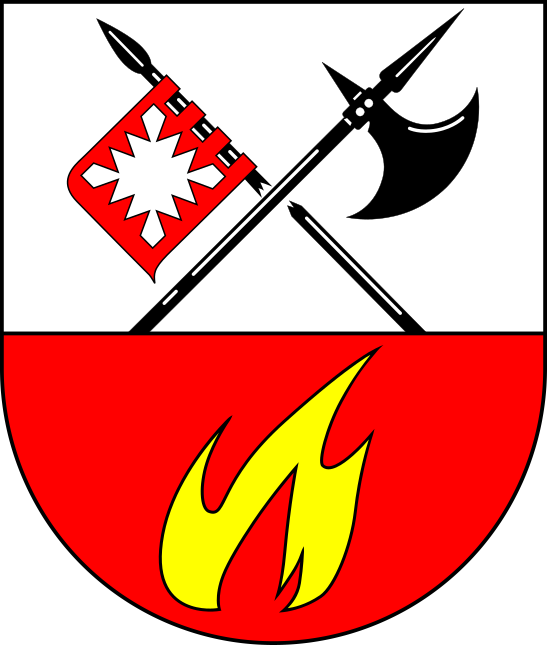
The peasants cast off helmets, harnesses and boots to stay nimble in the mud. With their long pikes they vaulted the ditches, the pole-leaping they had known since childhood. From the flanks they fell upon the Guard, brought down Slentz and destroyed the now rudderless army. In those hours, they say, Telse of Hochwöhrden of the Wollersmannen line appeared on the rampart and bore the banner before the peasants. Historians count her among the legends, yet in the memory of the land she stands as firm as the dike.
After barely three hours the king’s army was annihilated. Some four thousand men and three hundred and sixty nobles fell or drowned in the ditches, among them both counts of Oldenburg. With the banner-bearer Hans von Ahlefeldt the peasants even captured the Danebrog. On 15 May 1500 Lübeck and Hamburg brokered the peace that secured Dithmarschen’s freedom, for fifty-nine more years, until the Last Feud of 1559. The Guard’s old cry, Wahr di, Buer, de Gaar de kumt, the peasants turned around: Wahr di, Garr, de Bur de kumt. So it stands today on the monument.
- The Mermaid of Old Büsum · Büsum

Heimweer.be · Europees Erfgoed Bewaard

