
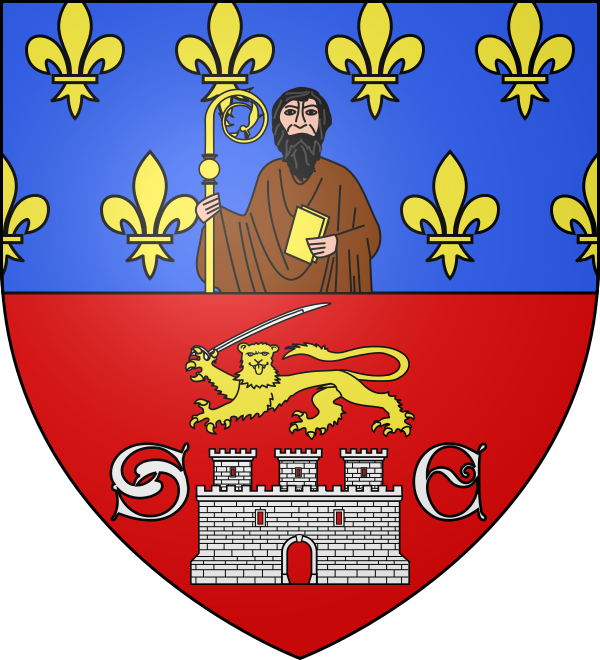
The Hermit Émilion and His Cave


Above the valley of the Dordogne, where the hills of the Gironde lie under vineyards, stands a small town bearing the name of a man who wanted above all to be left alone. Émilion came from Brittany and looked for a place where nobody knew him. He found a hollow in the limestone, a natural south-facing shelter, with water seeping out of the rock. Twelve centuries later that little town receives about a million visitors a year, and beneath its lanes lies a church cut out of the hill.


1 The bread under the cloak
In Vannes, the old capital of Breton Broerec, a young man served in the house of a count. Tradition calls him now a steward, now a household servant, or simply the baker of the household; who that count was exactly, nobody wrote down. What people did tell was this: the servant carried bread out of the door. Not stolen bread for himself, but bread for the poor of the country, day after day, without his master knowing.
One morning the count was waiting for him. «What are you carrying there under your cloak?» The servant said nothing. His master ordered him to open the folds. And when the cloak fell open there was no bread in it, but — says one reading — a handful of wood shavings; in the other reading, a lapful of flowers. The count let him go.
It is a fine story, and it does not belong to him alone. The same miracle is told of Elizabeth of Hungary, of Roseline de Villeneuve in Provence and of Nicholas of Tolentino in Italy: bread that turns into flowers under a cloak which a husband or a master pulls open. It is a wandering motif, not an eyewitness account. And of Émilion himself we know nothing except from a single text, a vita whose oldest known version dates only from the twelfth century, four hundred years after his death.
2 The cave, the spring and the seat
He left. He travelled south along the Atlantic coast and came to the monastery of Saujon near Royan, where he became a monk and, tradition says, stood at the oven once more. He did not stay there either. When too many people came on account of his name, he went further inland, into the forest of Combes above the Dordogne, to a place then called Ascumbas.
There he found his hollow. The vita lists what stood inside it: an oratory, a bed, a table, a seat and a spring. The water was caught in a basin cut out of the rock with steps down into it, deep enough to immerse a person; people were baptised there. He is said to have lived there for seventeen years; he died in 767. Around his cell his disciples put up their first huts, out of the huts grew a village, and out of the village a town that took his name.
The seat is still there, hewn out of the wall. A folk belief clings to it which the people of the town like to pass on: a woman who wishes for a child and sits down on that seat is said to fall pregnant within the year. The tourist office keeps the birth announcements it is sent for it, year after year. Anyone who hears this should know what it is: tradition, and nothing more than that.
3 A church cut from the rock and the red robes
A few steps from that cave, stonecutters began something improbable towards the end of the eleventh century: they cut a church out of the limestone. Not built up out of blocks, but taken away out of the hill, worked from the top downwards. Almost fifteen thousand cubic metres of rock came out. What remained is a nave eleven metres high with six bays, carried by pillars that have never stood anywhere else. From outside little of it shows: a facade, three tall windows, a bell tower above the square. It is one of the largest churches in the world to have come about in this way.
The town went on digging. Beneath the houses lies a second town of galleries and old quarries, from which came the material for the walls, the gates and the convents above. Saint-Émilion is built out of itself.
And then there is the wine. In 1199 John Lackland granted the town its Jurade, a council of notables which gave judgement and, more weightily, stood surety with a seal for every cask that went to England. The Revolution put an end to it in 1789; in 1948 the growers called it back as a brotherhood. Twice a year the jurats walk the streets in their red robes, and from the King’s Tower they proclaim in June their judgement on the new wine and in September the opening of the harvest. Since 1999 the whole juridiction has stood on the UNESCO World Heritage list as a cultural landscape: a historic vineyard landscape that has survived intact and is still at work.

Heimweer.be · Europees Erfgoed Bewaard

