
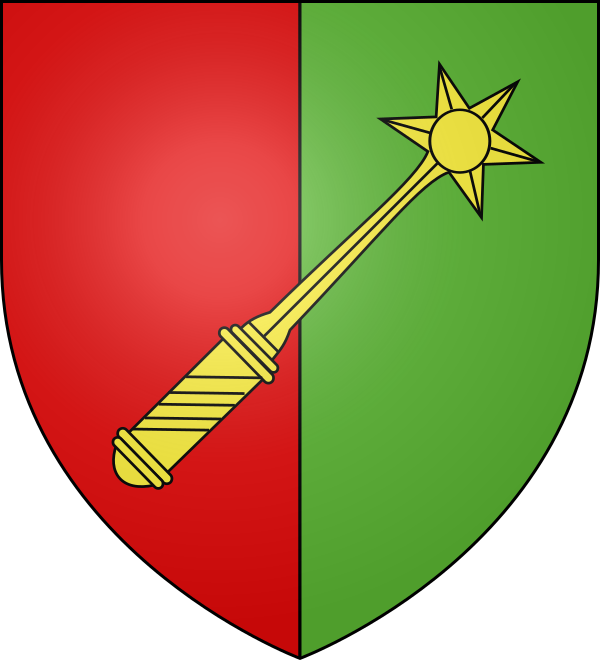
Jean Roesselmann, the dung carts and the freeing of Colmar


Colmar lies between the Vosges and the Rhine, in the middle of the Alsatian wine country, and it has kept its medieval centre almost untouched. Walk down the Grand-Rue and you pass the Koïfhus and the Maison Pfister, and behind the covered market begins the quarter they call Petite Venise, on the water of the Lauch. But the oldest hero-tale of the town happens at a gate, in the thirteenth century, and it carries the name Roesselmann.


1 The shoemaker’s son who became provost
In the thirteenth century Colmar was a young town with large intentions. Emperor Frederick II had granted it town rights in 1226, a wall enclosed the fields out of which it had grown, and at the head of the burghers stood a provost — a Schultheiss in German — who gave judgement in the emperor’s name. In the years of the Interregnum, when no strong king sat in the Empire, that was a dangerous honour.
This provost was called Johannes Roesselmann, Jean in French. He was no nobleman. His father was a shoemaker in Turckheim, an hour away among the vineyards, and the son had come to Colmar as a young man. First he sat as a deputy in the court; around 1249 he became provost himself. Under his hand Colmar joined a league of royal towns and, a little later, the great Rhenish league of cities. That was the policy of a man who knew where his town had to look for its freedom: to the emperor, not to the bishop.
In 1260 Walther von Geroldseck became bishop of Strasbourg, a young and ambitious lord with no patience for self-willed burghers. He forced Colmar under his authority. The town nobility, who had never cared for the risen shoemaker’s son, took his side. Roesselmann was stripped of his office and sent out through the gate.
2 The barrel, the dung carts and the break of day
He did not go far. Less than a year later the bishop was tangled in a war with his own city of Strasbourg, and Rudolf of Habsburg, landgrave of Upper Alsace, took sides against him. Roesselmann sought him out at Ensisheim and came away with armed men. In Colmar his friends were waiting.
Here begins what any Colmarian will tell you. The banished provost got back into the town without the watch noticing, hidden in a barrel. In the more richly decorated versions it is no barrel but a line of dung carts: as the gate opens the farmers drive in, the guards step back from the stench, and under the straw lie armed men who rise the moment the cart stands in the gateway. They overpower the garrison, throw the gate wide, and the relief force marches in. In 1261 Colmar belonged to itself again, and Roesselmann was provost again.
The following year the bishop took his revenge, and he too did it with a ruse. At daybreak his partisans had themselves let in as though they were Habsburg soldiers. Roesselmann saw through it at once. He raised the alarm — and fell under their blows. But his shout had woken the town. The Colmarians took up arms and crushed the attackers. The town was saved and its provost was dead: those two sentences have stood side by side ever since.
3 What the sources say, and what the town kept
Honesty is honesty: the core holds, the dung carts do not. Medieval chronicles and the Alsatian biographical dictionaries agree on the office, the removal in 1260, the return with Rudolf’s help in 1261 and the death in the spring of 1262. They speak of a barrel, not of carts. And the disguise they describe is not Roesselmann’s but his enemies’: it was the bishop’s men who passed themselves off as others. The dung carts are a later shoot on the same stem, grown in the taverns and polished up by the nineteenth-century collectors of Alsatian legends and by the popular stage, which liked to bring the provost home with a thundering trick.
The town itself is the finest footnote. Colmar was largely spared in two world wars, and so what Roesselmann defended is still standing: the Koïfhus of 1480, the old customs house where the delegates of the Decapolis met; the Maison Pfister of 1537 with its oriel and painted front; the fishmongers’ quay and the leaning timbered houses of Petite Venise on the Lauch. And in the old convent of Unterlinden hangs the Isenheim altarpiece, painted between 1512 and 1516 by Matthias Grünewald. Walk on down the Rue Roesselmann to the fountain and you see the provost on his plinth — wearing the face of a nineteenth-century mayor. That suits Colmar: here the centuries run straight through one another.
- Why the People of Colmar Are Called Knöpfler · Colmar
- The Pfifferdaj of Ribeauvillé · Ribeauvillé
- The Women of Rouffach and the Emperor · Rouffach

Heimweer.be · Europees Erfgoed Bewaard

