
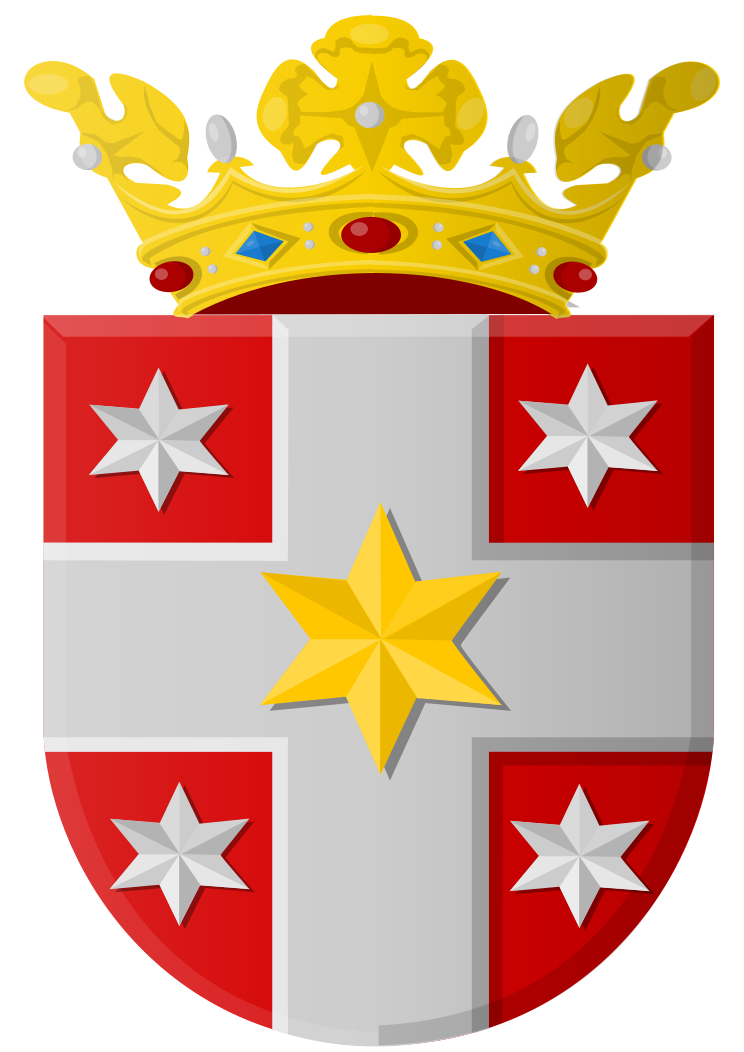
The knife in the cat’s paw


Vollenhove stands on a mound of glacial till in the Kop van Overijssel, one of the rises that form an arc around the old Almere: Texel, Wieringen, Gaasterland, Urk, the Land van Vollenhove. For centuries it was a town on the sea, with a harbour, a fishing fleet and a horizon of water. Today it looks out over ploughland. What the Zuiderzee left behind is not only land, but also a handful of stories that somebody wrote down in time — on a questionnaire form numbered F066p.


1 The knife in the cat’s paw
It stands there soberly, in the hand of whoever filled in the form: Volkskundevragenlijst 2, from 1937, form F066p — the number that stands for Vollenhove in dialect geography. The man who filled it in was called H. Mondria. The story he wrote down is registered in the Dutch Folktale Database of the Meertens Instituut as LYST224, subgenre: legend.
«Something strange happened to a cousin of my father», it begins. That cousin had to go to Harderwijk, where he was to eat. On the island he threw his knife among a pack of cats. It stuck in the paw of one of them. He sailed on to Harderwijk, and there a woman cut his bread and butter — with his own knife. While she cut she said to him: «It was your luck that the knife stuck fast, otherwise I would have thrown it in your face.»
That is all it is, and it does not need to be more. The catalogue of the database files it under SINSAG 0608, «Andere Begegnungen mit Hexentieren», and under motif G211.1.7: the witch who takes the shape of a cat. Whoever wounds the animal finds the wound again on a woman. What makes this legend belong to Vollenhove is not the witch but the water: the cousin went by sea, the cat sat on an island, and the knife travelled faster than the man.
2 The City of Palaces
Vollenhove is named in 944 as Fulnaho, a forest where Emperor Otto the Great allowed Bishop Balderik of Utrecht to hunt; in 1010 Emperor Henry II granted the Silva Fulnaho to the diocese of Utrecht. In the twelfth century Bishop Godfried of Rhenen had a castle built on the Almere, the Olde Huys, with a keep and a chapel. The village that grew around it, Op ten Camph, received town rights on 12 July 1354.
Its heyday came in the fifteenth century: sturgeon fishing, and a place as a lesser Hanseatic town. Then came the lords. In 1511 the town council granted a piece of land to the drost Georg Schenck van Toutenburg, a nobleman from Tautenburg in Thuringia; between 1524 and 1531 his Renaissance castle rose there, one of the first of that style in the Northern Netherlands. Schenck became stadtholder for Charles V, and Vollenhove became the seat of government for Groningen, Friesland and Overijssel.
It did not last. Schenck died in 1540, in 1581 the castle was dismantled during the Eighty Years’ War, and at the end of the eighteenth century it was demolished. What remained were two round gate towers, deliberately preserved around 1800 as an ornamental ruin in the new landscape park of Oldruitenborgh. In the town itself thirteen noble houses stood inside the ramparts — hence the nickname City of Palaces. From 1622 such a house had to be worth at least twenty-five thousand guilders.
3 The bells beneath the land
The sea that carried all this was young. The Almere was a freshwater lake until a heavy storm around 1170 broke a lasting opening to the North Sea; then it became the Zuiderzee. Vollenhove built a town bridge far out into the water, and around 1900 the steep Voorst was secured with basalt against erosion.
In 1859 the island of Schokland was evacuated. Of its more than six hundred inhabitants some one hundred and forty came to Vollenhove, where they settled on the peninsula called het Fort in the middle of the harbour; the number of ships jumped from 32 to 49. With them came their names — Klappe, Konter, Kwakman — and their stories.
One of those stands on the same Vollenhove form F066p, but now for questionnaire 18, filled in on 18 August 1954. The question asked whether people knew stories about bells lying on the bottom of a lake or of the sea whose ringing could sometimes still be heard. The answer: «Between Schokland and Urk lay the Gesteente. There one sometimes still heard the bells ringing.» And then, honestly: «I do not remember this well.» The database entered it as LIJST176, motif F993.1, bells sounding from the deep.
The Afsluitdijk closed off the sea in 1932, by 1940 the ring dike of the Noordoostpolder was complete, and in 1942 the polder fell dry. Since then the Gesteente lies under arable land. Whoever looks out from the harbour of Vollenhove sees fields, and on the horizon the polder tower of Emmeloord.
- The Cats of Blokzijl · Blokzijl
- The Goat Horns of Giethoorn · Giethoorn

Heimweer.be · Europees Erfgoed Bewaard

