
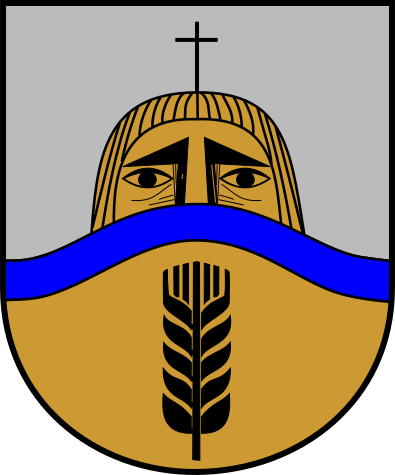
The Manna Grass on the Łeba


In the land of the Kashubians, where the river Łeba (Leba) winds through a broad, marshy valley towards the Baltic, lies the village of Cecenowo (Zezenow). On the wet meadows along the river grows the manna grass, a wild grass whose grains people once ate. How they learned this, and why it brought them no blessing, was told in the district like this.


1 The grass nobody noticed
On the marshy meadows by the Łeba, and especially near Cecenowo, grows the manna grass. In summer its tall stalks stand close together, and small grains ripen on their plumes. Whoever knows how to harvest them can make groats from them: manna groats.
In former times the people of the district paid no attention to this grass. They walked past it without a glance, and nobody thought there was food in it.
Then one day an old woman from Prussia came to the village of Rzuszcze (Ruschitz). Her own countrymen had driven her out because she was so poor. In Rzuszcze she was taken in. One day she saw the grass by the river and knew it at once. From these grains, she said, one could cook a porridge far more nourishing and tasty than even sago. She taught it to the people who had given her shelter, and they soon began to gather the grains.
2 The lord’s contract
But it brought them no blessing. For the lords of the estate at Rzuszcze liked the manna groats too. They made a contract with the villagers: from then on they had to deliver a large portion of the groats to the manor every year, and whoever failed to do so had to leave his holding.
What had been the gift of a poor stranger thus became a due that weighed on every house. It was no longer something people gathered for themselves, but something they owed.
3 The long walk to the Łeba
On top of that, the grass no longer grows at Rzuszcze, so the story goes. It does still grow by the distant villages of Cecenowo and Charbrowo (Charberow). So the people of Rzuszcze must walk there to keep their contract.
And so every year, at the end of June or the beginning of July, when the grass on the meadows was ripe, the people of Rzuszcze, the women above all, could be seen setting out all in one night for the Łeba. They went with sacks and baskets, along the fields and through the dark, to stand on the wet meadows at first light and strip the grains from the stalks.
It was a long way and hard work. What is more, they ran the risk of being stopped and punished as thieves, because they were walking on other people’s land. But they had to put up with all of it, so that the lord would not drive them from their farms.
So the manna grass on the Łeba, which had once given a poor woman a home, became a yearly burden for a whole village.
- The Hot-Tempered Squire of Duninowo · Duninowo
- The Evil Spirits of Dzierzgoń · Dzierzgoń
- The Miraculous Image of Malbork · Malbork

Heimweer.be · Europees Erfgoed Bewaard

