
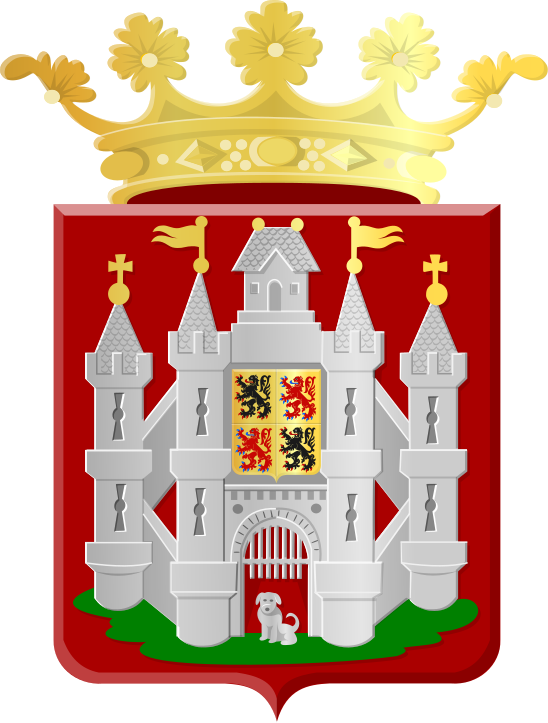
The Dragon of Mons


In Mons, where the Grand-Place shone beneath gabled architecture and alleyways guarded centuries-old secrets, there once lived a dragon. Not merely a monster from ancient chronicles, but a genuine entity that plunged the entire region into fear.


1 The Coming of the Monster
In the deepest night of the Middle Ages, when Mons was still a small but prosperous city bound by trade, the dragon appeared. No one knows precisely when. Some chronicles say the 7th century, others speak of the 10th. What is certain: at some moment when the city slept peacefully, the monster waited.
The dragon creature was no small reptile. According to medieval descriptions, it was the size of a large house, with wings broad enough to block the streets of Mons. Its skin was covered with scales colored like shields – green here, gold there, red where the greatest danger dwelt.
Its breath was probably the worst. When it exhaled, entire houses vaporized. Fields withered. Water boiled. Everything that had life died.
The dragon did not merely settle – it ruled. It demanded tributes, it took what it wanted, it terrorized the citizens of Mons until everything in life beyond mere survival was lost.
2 The Devastation of the Region
The first years were the worst. Whole villages around Mons were destroyed. The farms where wheat grew burned. The mills where grain was ground fell silent. The cattle markets were abandoned.
Mons itself became an occupied city. The dragon demanded food tribute – sheep, cattle, horses. The gates of Mons opened every week to deliver animals to the monster, as if it were a king with a hunger that could never be satisfied.
But worse was the psychological suffering. Parents could not let their children play outside. Merchants could not transport their goods to other cities. The swimming holes where young and old refreshed themselves were abandoned. It was not only that the dragon was physically terrible – it was that it had corrupted everything that was normal, everything that lived.
3 The Crystallization of the Story
Over the years, the legend of the dragon grew. Tales became intertwined with exaggerations. Was it now a natural monster or a demon? Was it a punishment from God or a natural part of the universe that unluckily found Mons?
But all stories had a constant: the dragon was real. The disappearance of livestock could not be denied. The ruined piles of buildings were still visible. The scars of the monster were etched into the landscape.
It was in this dark period that the archetype of ”dragon-slaying” began to form. Tales spoke of knights who came and went, none succeeded. There was talk of prayers and processions. There was talk of hope, always hope, that someone would come who was strong enough.
4 Saint George Appears
Legend says that Saint George, the holy knight with horse and spear, one day approached Mons. Some versions say he came from the east, from Cappadocia where he legendarily killed a dragon. Others say he simply ”appeared” in Mons in answer to the city’s prayers.
What is certain: his arrival changed everything. Saint George is depicted on his white horse, with a red cloak, a spear raised in his hand. This image – the knight against the dragon – became the archetype of hope.
But in this phase of the legend – the phase BEFORE the battle – Saint George is not yet the victor. He is the harbinger of a new chapter. Mons saw hope reborn. The dragon, which for so long had been the only story, now had an opponent.
5 The Description of the Dragon
Before we move to the battle, the monster itself must be better drawn. For the dragon of Mons was not merely destruction – it was also intelligence.
Several texts speak of the dragon as being particularly clever. It could adapt. If knights came seeking it, it disappeared into the caves outside the city. If the citizens prepared for a siege, it withdrew. It was not blindly violent – it was calculated.
The dragon was probably some natural phenomenon that, through human fear and medieval imagination, had been woven into mythic proportions. A giant python perhaps, or some colossal reptile species. Or simply a legend growing around real food shortages and disease.
But for the people of Mons, it was utterly real. And it drove all normality from their sight.
Read how Thor nearly fished up the Midgard Serpent, the serpent that lies around the whole world.
To Mythology →- The Golden Coach of Mons · Bergen
- The Lumeçon: The Ritual of Mons · Bergen
- The Doudou of Mons (Ducasse of Mons) · Bergen

Heimweer.be · Europees Erfgoed Bewaard

