
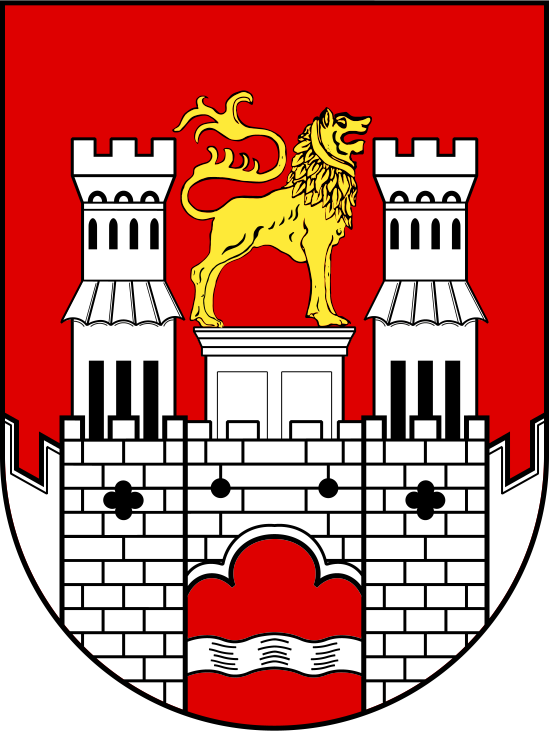
Ainpöckisch Bier — the wide gates of Einbeck


Einbeck lies in southern Lower Saxony, in the district of Northeim, between Göttingen and Hildesheim. More than a hundred and fifty late medieval half-timbered houses still stand there. Anyone walking the old lanes notices something odd: almost every old house has a gateway far too wide and far too high for a dwelling. These gates are not ornament. They are the proof of a right that belonged not to a person but to the stones — the brewing right — and of the beer that made Einbeck rich and gave its name to a whole class of beer.


1 The right that clung to the house
The brewing right in Einbeck belonged not to a person but to a house. Whoever bought the house bought the right with it. More than half of all the buildings in the town held such a brewing entitlement; the municipal tourist office speaks of over seven hundred houses between the fourteenth and the seventeenth century. Not every one of those houses actually brewed, but the right lay there like a treasure in the walls.
The strangest part is that the brewers owned no kettle of their own. The brewing pan was the property of the town. On brewing days it was carted through the lanes, through the gateway, up onto the brewing floor, where the householder set his mash. Then the pan travelled on to the next house. That is why the gates had to be so wide: not for coaches and not for show, but for the shared pan of the town. Anyone walking today along the north side of the Tiedexer Strasse still sees the tall round-arched gateways standing in rows.
Each brew yielded some two thousand two hundred litres. What came out of it the brewer did not sell himself. The town council arranged the storage, the inspection and the trade in common. Einbeck brewed as a town, not as a brewery — and precisely for that reason the beer could carry the same name and the same reputation across the whole of Europe.
2 From Antwerp to Riga
The first exports of Einbeck beer are documented for the year 1351. The oldest surviving record of a sale dates from Palm Sunday 1378: in the account book of bailiff Brendeke of Celle it is written that he settled with Duke Albrecht of Saxony and Lüneburg for two tuns of Einbeck beer, two and a half marks and four shillings. That register lies in the Lower Saxony State Archives. This is not a legend but a bill.
In 1368 Einbeck joined the Hanseatic League, and after that it went quickly. The market reached from Antwerp to Riga and from Stockholm to Munich. In Hamburg the beer even had its own trading house, the Eimbeck’sche Haus. It was deliberately brewed strong: an unusually high original gravity, much alcohol, much hops, for only so could it survive months in a cask aboard a ship. What began as a trick of preservation became the trademark: Einbeck beer counted as a luxury good.
On 26 July 1540 the town burned down almost completely. The wealth the beer had brought allowed a rapid rebuilding. The houses were raised in a single uniform style, on top of the far older vaulted cellars that had survived the fire. So arose the half-timbered townscape that still stands. In 1794 all the Einbeck brewing rights were merged into one municipal brewery: the gates remained, the right vanished into a company.
3 Ainpöckisch, and how Bock came of it
On 17 April 1521 Martin Luther is said to have received a jug of Einbeck beer from Duke Erich at the Diet of Worms. He is said to have answered: «Der beste Trank, den einer kennt, der wird Einbecker Bier genennt.» In honesty: this is tradition. The sources carefully write «is said to», and the rhyme cannot be traced in Luther’s own writings. What is certain is that Einbeck beer was drunk at his wedding in Wittenberg in 1525 — whether the town council gave it or Luther had it fetched himself differs from source to source.
More important for the word is what happened in Bavaria. From 1555 the Wittelsbach court had itself supplied from Einbeck. In 1573 it founded its own court brewery at Trausnitz castle near Landshut, moved to Munich in 1589. In 1614 an Einbeck master brewer was lured away — probably named Elias Pichler; even his name is not certain. In Munich he brewed his «Ainpöckisch Bier».
And there the word changed. In the Bavarian dialect «Ainpöckisch» became «Oanpock»; a Munich source of 1630 writes «ampokhisch pier». In the nineteenth century only «Bock» remained, which even passed into French as «un bock». This is no tale: the etymological dictionary follows the sound shift step by step. A tale, on the other hand, is the billy goat on the label. It appeared only once nobody remembered that «Bock» had once been the name of a town.

Heimweer.be · Europees Erfgoed Bewaard

