
Arlette and the Duke of Normandy


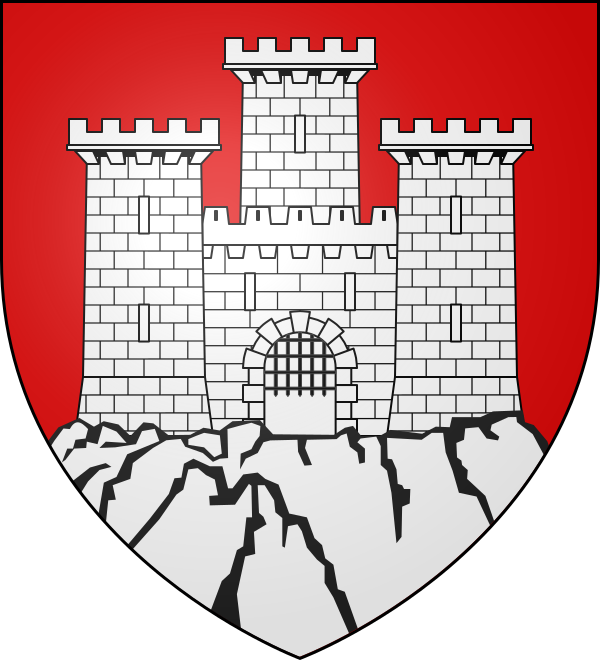
On the Ante, in Normandy, the town of Falaise bears its name well : it grew up on a spur of rock crowned by a stone fortress. It was there, around 1027, that a child named William was born, who would become duke of Normandy and then king of England. And at the foot of that castle, so they say, beside a spring that still flows, his father, Duke Robert, caught sight of a girl of the common people, Arlette, the daughter of a tanner. Of that meeting, half history and half legend, the town kept the name of a fountain and the memory of a king born out of wedlock.


1 The town on the spur
Even before William’s reign, Falaise was one of the residences of the dukes of Normandy. The fortress, built on a spur of schist above the gorge of the Ante, is among the first stone castles of the region : excavations dated a first masonry curtain wall to the beginning of the eleventh century. Duke Robert, second son of Richard II, liked to stay there while he was still only count of Hiémois. When he became duke in 1027 he held Normandy with an iron hand, and it was at Falaise that his court gathered.
Of that earliest castle almost nothing visible remains : the great stone keeps admired today are later. The first, a broad quadrangular palace-keep, was raised around 1123 by Henry I Beauclerc, the youngest son of William. His grandson Henry II added a second, smaller and more cheerful keep, where he spent Christmas of 1159 with Eleanor of Aquitaine. And after the king of France conquered Normandy in 1204, Philip Augustus had the Talbot tower built alongside, a heavy round tower purely for defence.
The castle went on to know the sieges of the Hundred Years’ War, served as a stone quarry, and later housed the town’s college. Listed as a monument since 1840, saved from ruin from 1864 onward, it bears today the name castle of Guillaume-le-Conquérant. In the north-east corner of the great keep a room is still shown that tradition calls, wrongly, the chamber of Arlette.
2 The tanner’s daughter
The story told in Falaise is a simple one. One day Duke Robert, from the top of his ramparts, caught sight of a girl washing linen at the fountain, below the castle. Her name was Arlette, or Herleva, and her father Fulbert was, so they say, a tanner in Falaise. The duke fell in love with her and wanted her at his side. Some versions add that she refused to enter the castle by the back door, like a servant, and rode in only on horseback, through the great gate, her head held high.
Arlette was never Robert’s wife. She became his companion in the Danish manner, a recognised union but without a church marriage. Around 1027 or 1028 she gave birth, in the castle of Falaise, to a son : William. The duke later set out on pilgrimage to Jerusalem and died on the way back, in 1035, without seeing his child grow up. Before leaving he had the barons swear to recognise young William as his heir.
And this is where honesty belongs. Arlette is no mere invention : the Norman chroniclers name her as the daughter of Fulbert, and it is known that she afterwards married Herluin de Conteville, by whom she had further children, among them Odo, the future bishop of Bayeux. She was buried around the middle of the century at the abbey of Grestain. The tanner’s trade, on the other hand, may owe more to anecdote than to fact : some evidence gives her family the standing of townsfolk rather than of a humble craftsman.
3 A king born out of wedlock
Because his parents were not married, William was long called William the Bastard before he became the Conqueror. It weighed on him. During the siege of Alençon, the story goes, the besieged mocked him by beating animal hides on the walls, to recall the trade of his mother’s family. The insult struck home, and William did not forget it. Yet it was this same child of Falaise who, in 1066, crossed the Channel and became king of England.
Out of the legend the town has made something tangible. At the foot of the old town still flows the spring called the fountain of Arlette, after the girl at the linen. On the square that bears the Conqueror’s name stands his equestrian statue, a bronze by the sculptor Louis Rochet, surrounded by the first dukes of Normandy. And every summer a medieval festival calls back into the streets the time when Falaise was a capital.
The historians remind us that the scene at the fountain is attested by no early text, and that the room in the castle was never Arlette’s. It does not matter. The town has no need for everything to be true for everything to be its own : a duke, a girl of the common people, a spring at the foot of the rock, and a child who changed the fate of two kingdoms. Falaise keeps the fountain, and the name of Arlette with it.
- The Telle du Conquest and Queen Matilda’s Needle · Bayeux
- The Fairy of Argouges and the Forbidden Word · Vaux-sur-Aure

Heimweer.be · Europees Erfgoed Bewaard

