
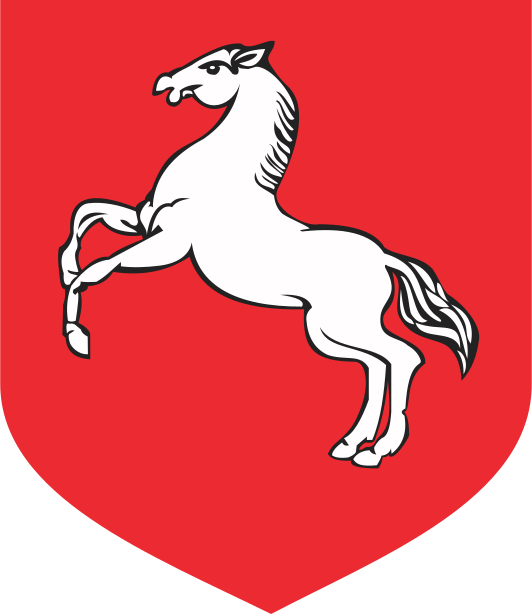
Lubrański, the Cruel Lord of Gosławice


Gosławice is today a district of Konin, in the east of Greater Poland. A Gothic castle of red brick stands there, built between 1418 and 1426 for Bishop Andrzej Łaskarz together with a church. But the ghost that the people say haunts Gosławice is not the bishop’s. It belongs to a later lord: Lubrański.


1 A lord without mercy
Lubrański was the lord of Gosławice, and as long as he lived he was an exceedingly cruel man. Whoever lived in his villages soon learned to keep off the roads when he was coming.
For Lubrański turned aside for no one who stood in his way. If children were playing on the road, he drove his horses straight at them and rode them down beneath the hooves. The dust of his retinue had not yet settled before he was gone, without a backward glance.
Nor did he spare houses. If a hut or a barn spoiled his view, he had it set on fire. The flames leapt up, the people saved what they could, and the lord of Gosławice looked with satisfaction at the open land that was left.
And those who served God had it hardest of all with him. He persecuted the servants of the Church with a stubborn hatred, as if their very existence enraged him. No one dared to contradict him. So he lived, and so he died.
2 The fiery steed
But death was not the end of it. Whoever has done so much evil finds no rest in the grave, the people said. Lubrański had to atone for his deeds, and he did so in Gosławice itself, in the place where he had ruled for so long.
On still evenings, when the mist hung over the fields and the wet meadows, the villagers saw him appear. He was not alone. Around him crowded a whole retinue of evil spirits, dark shapes that swarmed about him and never left him in peace for a moment.
They led a horse by the bridle. It was no ordinary horse: it was a steed of fire, with a mane like flames and hooves that glowed in the dark. The spirits held it still before him and forced Lubrański to mount.
Whoever saw it never forgot it. The lord who had once ridden children down without a second thought now had to climb onto a horse that scorched him.
3 More than a hundred years
Lubrański did what the spirits demanded of him, but not in silence. He wept aloud, and he wailed and lamented as he climbed onto the fiery steed. His voice carried far across the fields of Gosławice.
Whoever came close enough could make out his words. He cried that he had been suffering these torments of purgatory for more than a hundred years. More than a hundred years, again and again, with no end in sight.
And he said why he had to suffer so. It was for what he had taken from the Church: he had seized certain church funds, money meant for the service of God. For that he had to atone.
Then the procession set off, the fiery steed in front, and the spirits drove it away into the night. The light of the flames grew smaller and smaller, until it vanished somewhere among the fields. Over Gosławice only the sound of his lament lingered for a while, and after it, silence.
- The Birch of Gryżyna · Gryżyna
- The Devil’s Treasure of Lubonia · Lubonia
- The Phantom of Rydzyna Castle · Rydzyna

Heimweer.be · Europees Erfgoed Bewaard

