
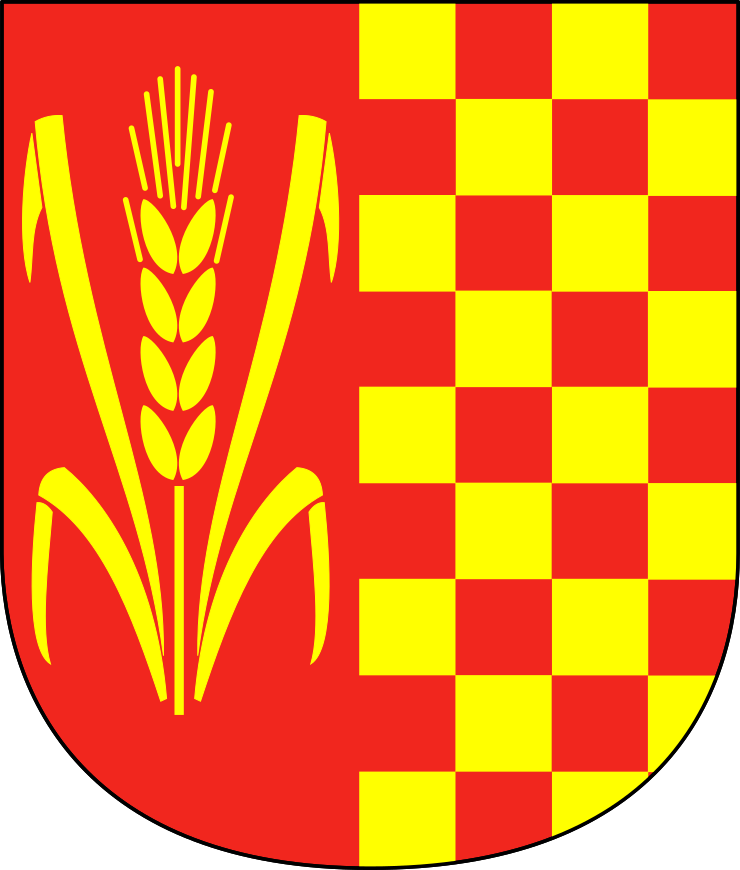
The Devil’s Treasure of Lubonia


Lubonia is a village in the south-west of Greater Poland, not far from Leszno. Of the old castle that once stood here, all that people can show today is an earthen mound. Yet beneath that mound, so the story went, lay a treasure that no one was ever allowed to raise, and the last person who tried paid a terrible price for it.


1 A treasure in a dream
In the old castle of Lubonia vast treasures lay hidden. Every new lord of Lubonia was shown them, in a dream, during the very first night he spent in the castle. Yet the treasure could only be dug out by innocent hands and without the help of iron.
Many a man set out to search for it. But each time an incomprehensible aversion held him back, so that no one ever truly did it. So it went on for years and years, until under a new agreement Lubonia passed into the hands of Lady Zborowska, the heiress of eighty villages round about.
No sooner had she moved into the castle than she, too, saw the treasures in her dream on the first night. More than that: she saw them night after night for a whole year. And like those before her, she did not dare to search all that time, for she too was filled with that strange aversion. But when the year was over, greed won, and Lady Zborowska resolved to carry out her plan.
2 Children’s hands and iron doors
She called together the children of her peasants, children no older than three, and ordered them to dig away the great mound with their bare hands. The soil of Lubonia is fertile but hard, and for such feeble workers it was an almost impossible task. The little ones were kept at work with threats, and any who collapsed exhausted and could go on no longer were even punished. So the work went quickly, but the earth was watered with the blood of innocent children.
After long digging everyone understood that the treasure must be close. Dressed stones appeared in the ground, then a continuous wall, then a vault and finally a door bound with iron. It was not easy to break open, but they managed it. Behind that door, however, a second one appeared, and behind the second a third, each heavier and bound with stronger iron. Still, they were all smashed in.
When the last door gave way, Lady Zborowska saw heaps of gold, as close together and as high as heaps of chaff in a barn.
3 Satan’s gold
Greedily she threw herself on the gold. But suddenly a dreadful roar sounded outside. Everyone ran out, and on the hill close to the village, which was called Łysa Góra, the Bald Mountain, they saw a rider on horseback. The horse was grey, and grey too were the rider and his clothes.
‘Satan is my name,’ roared the rider, ‘and these treasures are mine. Woe to anyone who touches them: I will punish the bold one with fire.’ Then he vanished.
Everyone was badly frightened. Only Lady Zborowska was not afraid. She went straight back into the vault, stretched out her hands to the treasure and took a handful of gold. At that very moment she heard the voices of her household: ‘Fire! Fire in Pawłowice!’ They all abandoned their mistress and ran to help the village, but in vain: it burned to the ground.
The next day, deaf to the pleas of her courtiers, Lady Zborowska went back all alone to the dreadful vault. Again she reached out her hand, again she took a handful of gold, and again the frightened cries came from the manor: ‘Fire! Fire in Zdzitowiecko!’ Again everyone rushed there, and again in vain, for that village too went up entirely in flames.
In this way twelve villages burned down, and Lady Zborowska, unbending and insatiable in her greed, kept gathering Satan’s gold to herself.
But at last the measure of her sinful indifference to the misfortune of her neighbours was full. Her subjects rose up, murdered her and threw the earth back over the enchanted treasure.
- How Miłosław Escaped the Plague · Miłosław
- The Devil of Gnieźninek and the Cap Full of Coins · Gniezno
- The Penitent Souls of the Holy Sepulchre Church · Gniezno

Heimweer.be · Europees Erfgoed Bewaard

