
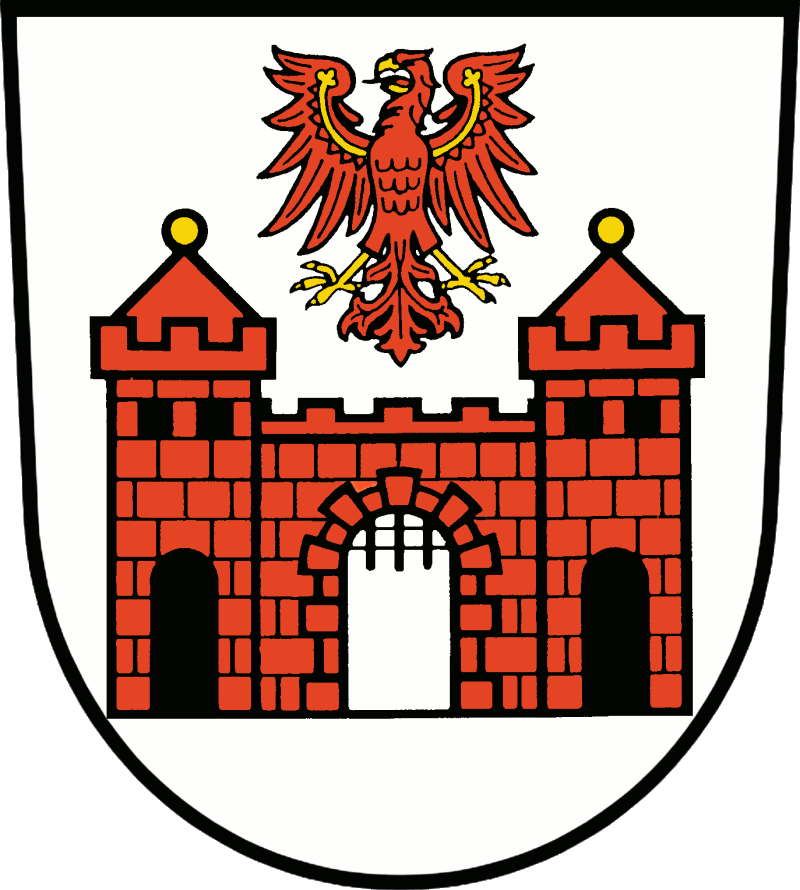
Loyal Britzen


In the Fläming, where the Nieplitz wells up out of the forest floor, lies a small town with an oval ground plan and two mighty churches, Sankt Marien and Sankt Nikolai. Once it was called simply Britzen. Then, in the summer of 1348, an old pilgrim rode through the Mark Brandenburg and gave himself out to be the long-buried Margrave Woldemar. Town after town fell to him, whole districts paid him homage. Only Britzen kept its gates shut and stayed loyal to its rightful lord. Ever since, it has borne the name Treuenbrietzen, the loyal Britzen, and that loyalty stands written in its name to this day.


1 The town at the crossroads
Treuenbrietzen grew out of a castle of the Ascanians, first recorded in 1208 and standing on an older Slavic rampart. Around it a market settlement rose at the crossing of two ancient trade roads: one ran from Berlin to Leipzig, the other, perhaps still more important, from Magdeburg by way of Jüterbog to the east and southeast. In 1290 the place is named as a civitas, and by about 1300 it lay safely behind a wall. Between 1296 and 1305 monks of the nearby Zinna monastery built this town wall with its three gates, and they did so in exchange for water and mill rights.
So arose the oval ground plan with the even grid of streets that the town keeps to this day. Two churches rose above the low houses: the parish church of Sankt Marien, founded before 1217 and built as a cross-shaped basilica of fieldstone and brick, and Sankt Nikolai, a vaulted basilica with a mighty crossing tower. Whoever pictures these solid walls and heavy gates understands why the townsfolk could later dare to refuse entry to an almost all-powerful lord.
2 The pilgrim who would be a margrave
In 1319 Margrave Woldemar had died, the last great Ascanian in Brandenburg, and he had been carried solemnly to his grave. Four years later King Ludwig the Bavarian granted the now lordless Mark to his own son, and so it passed to the house of Wittelsbach. But in the summer of 1348 an old man appeared before Otto, Archbishop of Magdeburg, and claimed to be that supposedly dead Woldemar. His burial nine and twenty years before had only been staged, he said; in truth he had spent the long years on a pilgrimage to the Holy Land.
The princes who begrudged the Wittelsbachs the Mark eagerly seized upon the stranger and hailed him as their returned lord. Within a few weeks large parts of Brandenburg paid him homage, and even Emperor Charles the Fourth invested the supposed Ascanian with the Mark on the second of October 1348, so as to weaken his rivals. Who the man truly was, no one knew for certain. He was called a miller’s journeyman named Jakob Rehbock, yet his real origin has remained unexplained to this day.
3 The loyalty of Britzen
While almost the whole Mark cheered the false Woldemar, the townsfolk of Britzen held to the oath they had sworn their prince. They took the pilgrim for an impostor and kept their gates closed to any but the rightful lord. This was no easy defiance, for a ruler who had nearly the whole land behind him does not lightly forget such a refusal, and a small town could pay dearly for it. Yet Britzen did not waver in its loyalty.
In February 1350 the pilgrim was formally declared an impostor. Emperor Charles was reconciled with the Wittelsbachs, invested the rightful prince anew, and proclaimed in the spring that Woldemar was not the true margrave. The impostor withdrew to the court of Anhalt-Dessau, where he was nonetheless treated with every courtly honour until his death around 1356. But Britzen had proved its loyalty. From the address to the loyal citizens of Britzen the byname grew, and Britzen became Treuenbrietzen. To this day the old town centre stands almost intact with its wall remnants and towers, a memorial in stone to the year in which a small town stood alone and by that very act won its name for good.

Heimweer.be · Europees Erfgoed Bewaard

